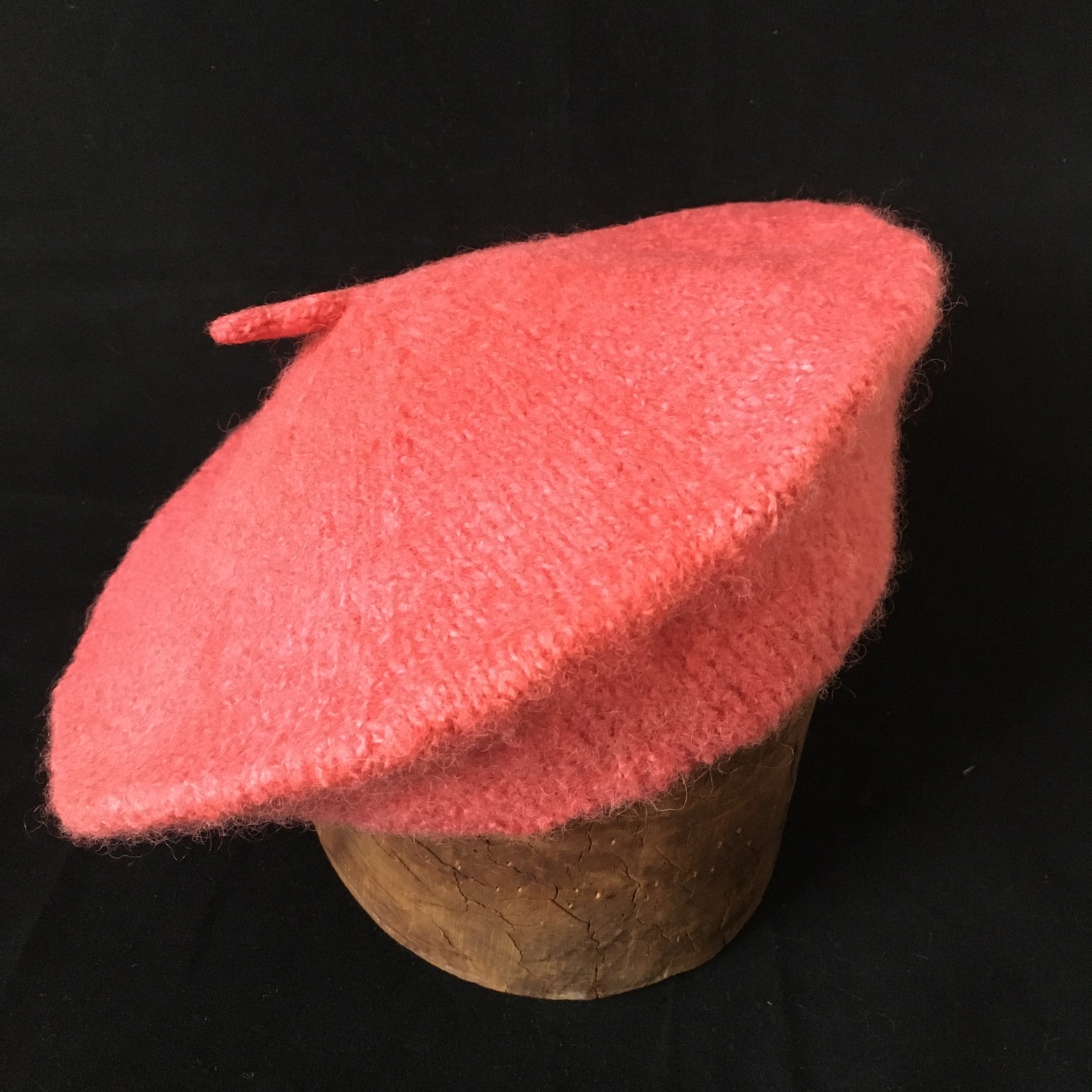
The story of a Handmade Red(ish) Beret

In the past, I used to buy in berets to sell on my market stall and I noticed that the red ones always sold out first.
These berets were not especially good quality, being items that were mass produced in China, but were popular because they were competitively priced and brightened up my stall display and sold well.
It recently became my aim to make my hats using the most sustainable methods possible and think that a sheep-to-head provenance for a beret will be second to none. So the obvious progression is to hand make a red beret using sustainable materials and processes.
Here’s how it happened:
The Dartmoor Greyface sheep that grew the fleeces for this beret graze at Middle Chase Farm near Salisbury. The sheep mainly eat grass from chalk pastures. Each sheep has one acre of pasture and the farmer does not use any fertiliser at all.
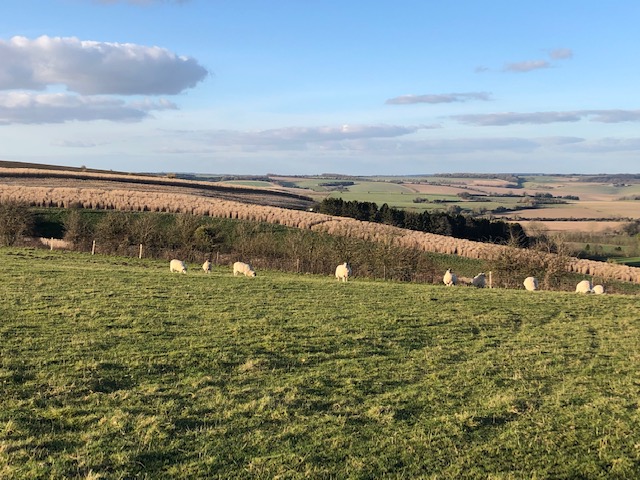
The fleeces were brought to me by the farmer en route to another address near me (so that was not even a special journey!).
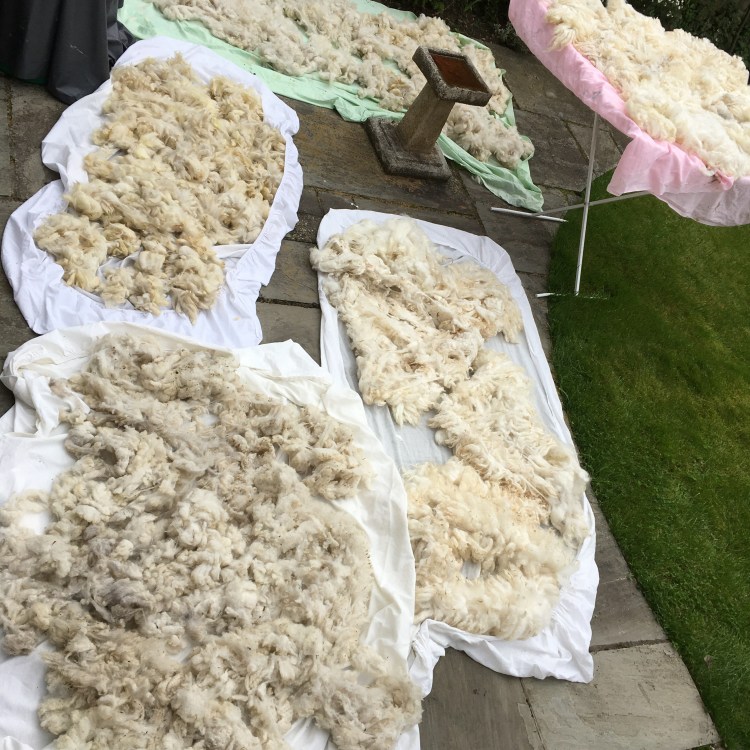
I washed the fleeces and used the clearer rinsing water to water the garden.
The fleeces were laid out and dried outside in the summer sunshine.
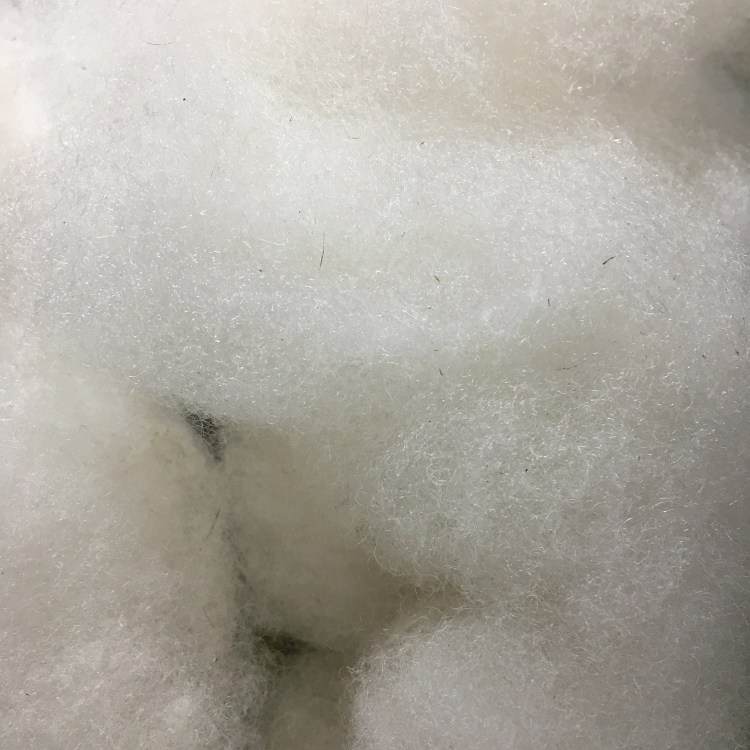
After being carded by hand over several weeks, I then hand-spun the carded rolags into a two-ply yarn, roughly of double knitting thickness.
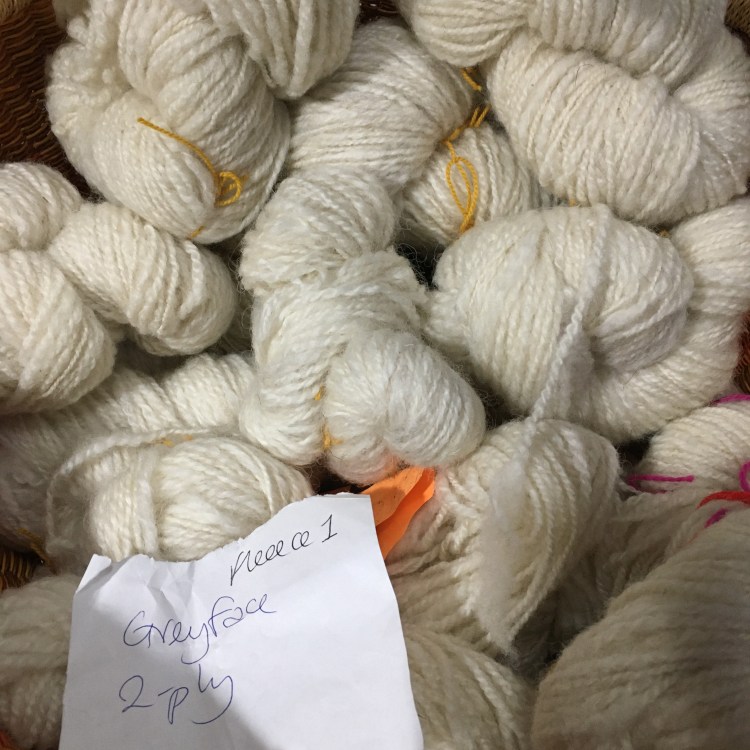
Finally, I experimented by knitting several shapes and sizes of beret and eventually settled on my own design of a nine-sectioned pattern to ensure that the felted piece shrinks down to a sensible size. I then experimented with the felting process and now have achieved a lovely knitted fabric that consistently fulls (felts) down in the washing machine to a lovely thick texture and good shape, but without losing its handspun character.
Now for the lovely colour: as a part of another project earlier in the summer, I had a bath of red dye left over. This couldn’t possibly go down the drain.
Once the soft pale cream beret was felted, I immersed it in the left-over hot dye bath and achieved a lovely dark coral colour. With hindsight (what a wonderful thing) the dye bath could probably have done with a bit more dye added to get a more scarlet colour. Perhaps I’ll do that next time.
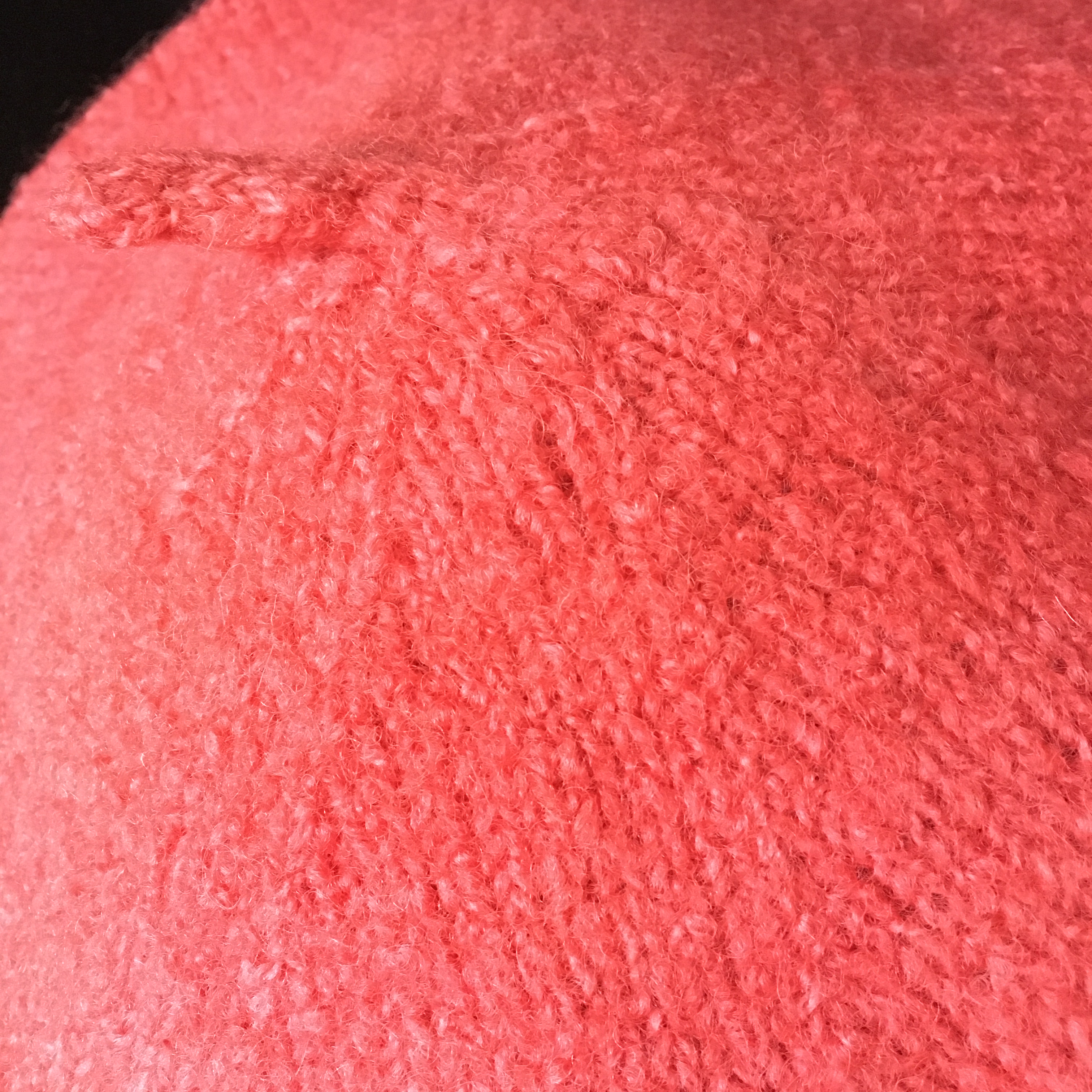
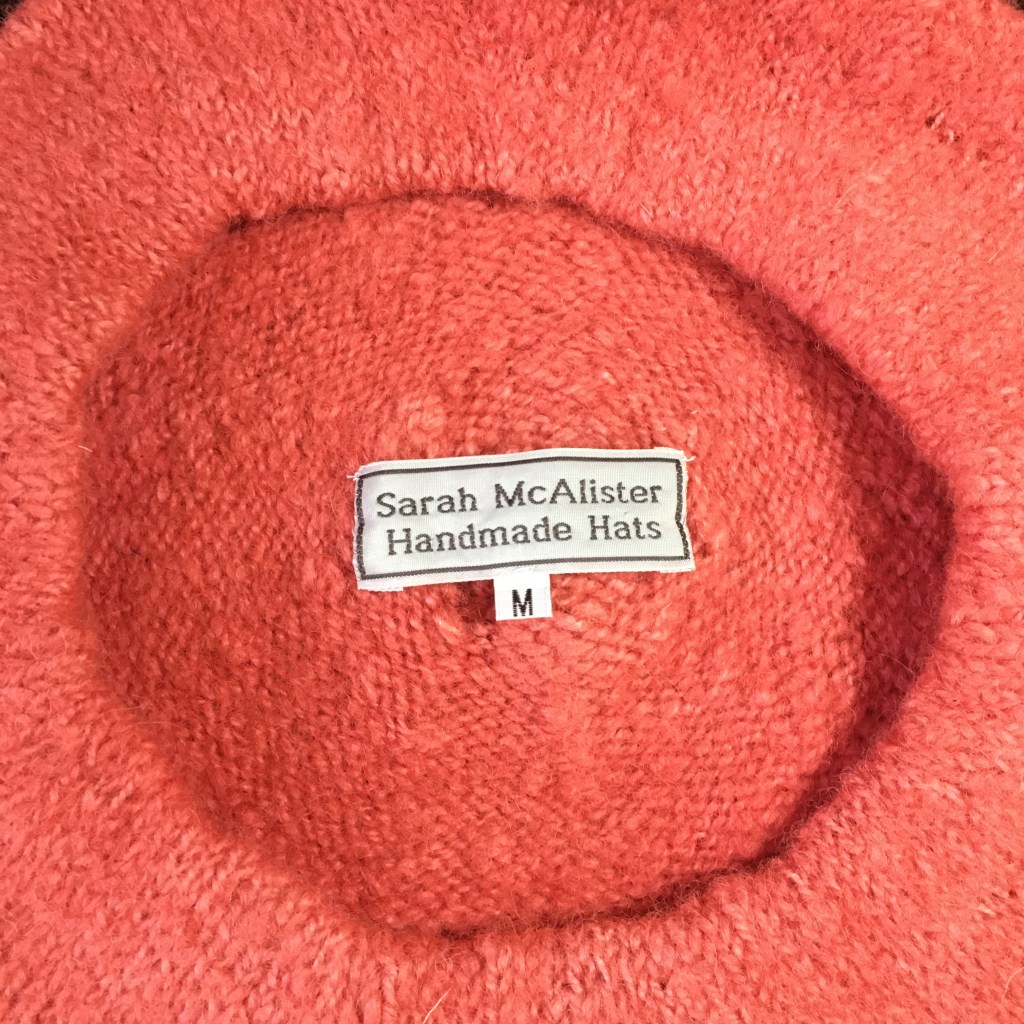
The whole garment travelled less than 100 miles from sheep to hat. The fleece and yarn passed through my hands twelve times (skirting, washing, drying, carding, spinning, plying, skeining, balling, knitting, felting, dying, blocking) so it truly has “Handmade” status.
My experimental (undyed) berets as well as the original coral red beret are all on sale on the following link:
https://www.numonday.com/shop/sarah-mcalister-hats-caps-for-chaps-and-handmade-textiles/
My beret knitting pattern for felting is not available to the public, but I hope to bring it and some other knitted hat patterns to you in the future.
Please re-visit my blog post “Surrey Tweed 2022: from fleece to fashion” for more details about cleaning and processing the fleeces.
If you would like any hand knitted hats made for you, please get in touch and I’ll be pleased to help.
 Sarah McAlister