(With apologies to Agatha Christie for pinching the title)
As a part of my hat making practice, I sometimes have to use acid dye to colour hats, fabrics and feathers for a customer. Regardless of how careful I am to only make a small dye bath, this often leaves me with an amount of unused dye liquid. In my last post, I mentioned that I tried to use up some red dye left-over from another project, with limited success.
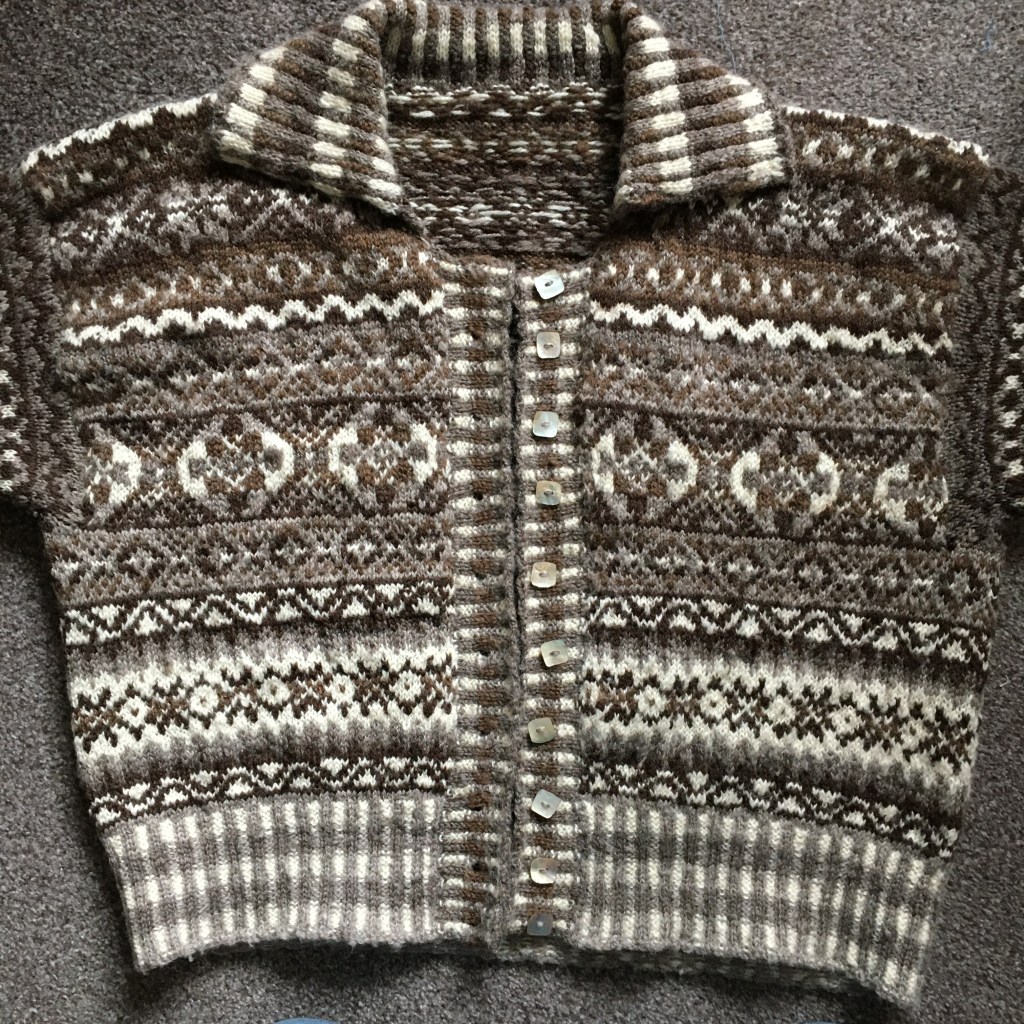
I am currently studying for an MA Textiles at University of the Creative Arts at their Epsom campus. That course focusses on creating and developing textile outcomes in a sustainable way. In the past, I have considered using yarn only in its natural colour (see my post about knitting a Fair Isle Cardigan). Another option is to undertake the brewing up of natural dyes, but I haven’t found enough hours in the day for me to take that project on yet!
Back in the good old hat-making days, I bought a rainbow of little Dylon acid dye powders from which to mix up the required colour. About ten years ago, these dyes became unavailable and I am gradually using up my limited remaining stock.


In this post, I will attempt to use up all the colour in a dye bath that is left over from another project and record below what happened and whether it was successful.
The yarn
This is a fine two-ply Swaledale yarn labelled as July 83 that was acquired from a “help yourself” table. I used four skeins of yarn. This was soaked in a weak vinegar/warm water solution for about ten minutes, to open up the fibres.
The dye bath
Then the first skein of yarn was placed into the dye bath which was made up of a mixture of cerise and navy blue powders to achieve the colour I required for my initial project (see the lace on the right in the photo below). The dye bath is a fish kettle bought from a charity shop and is an ideal shape for dyeing skeins of yarn and feathers. There wasn’t enough liquid in the kettle to completely submerge the yarn, so I made the decision to deliberately dye it unevenly. Let’s see whether or not that was a good decision.
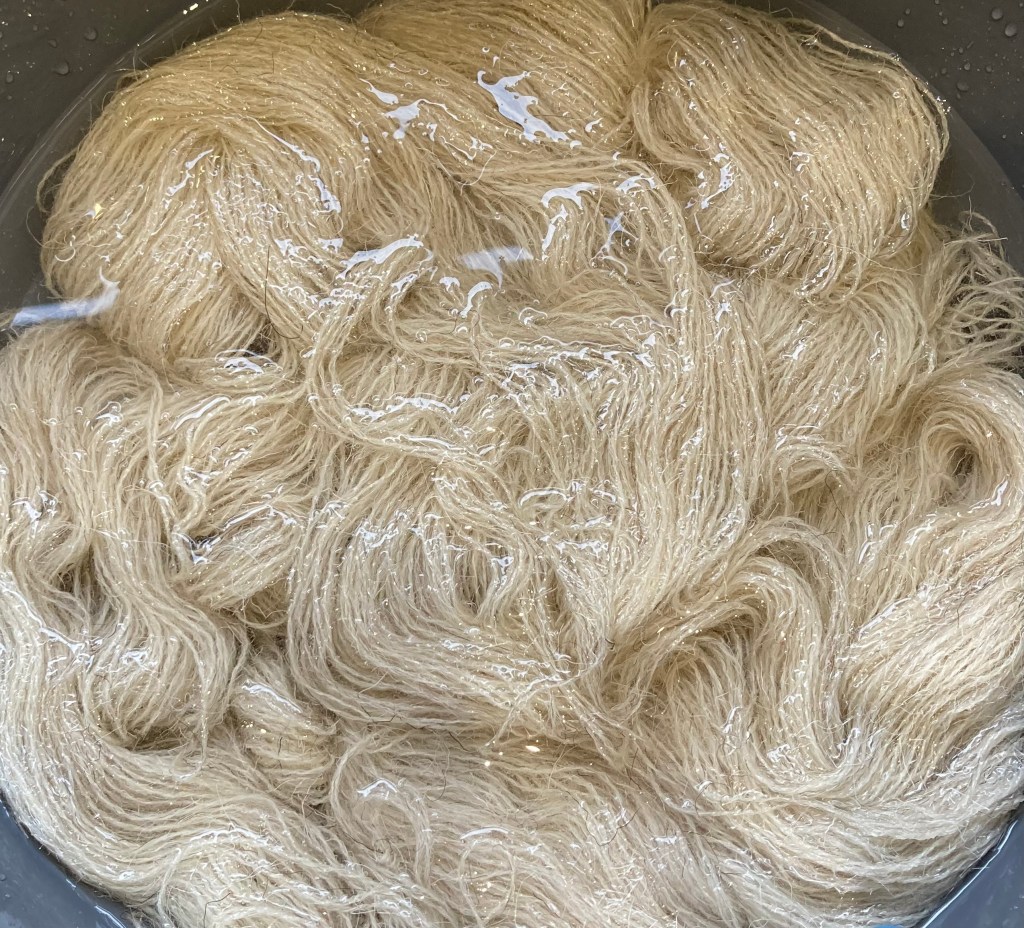

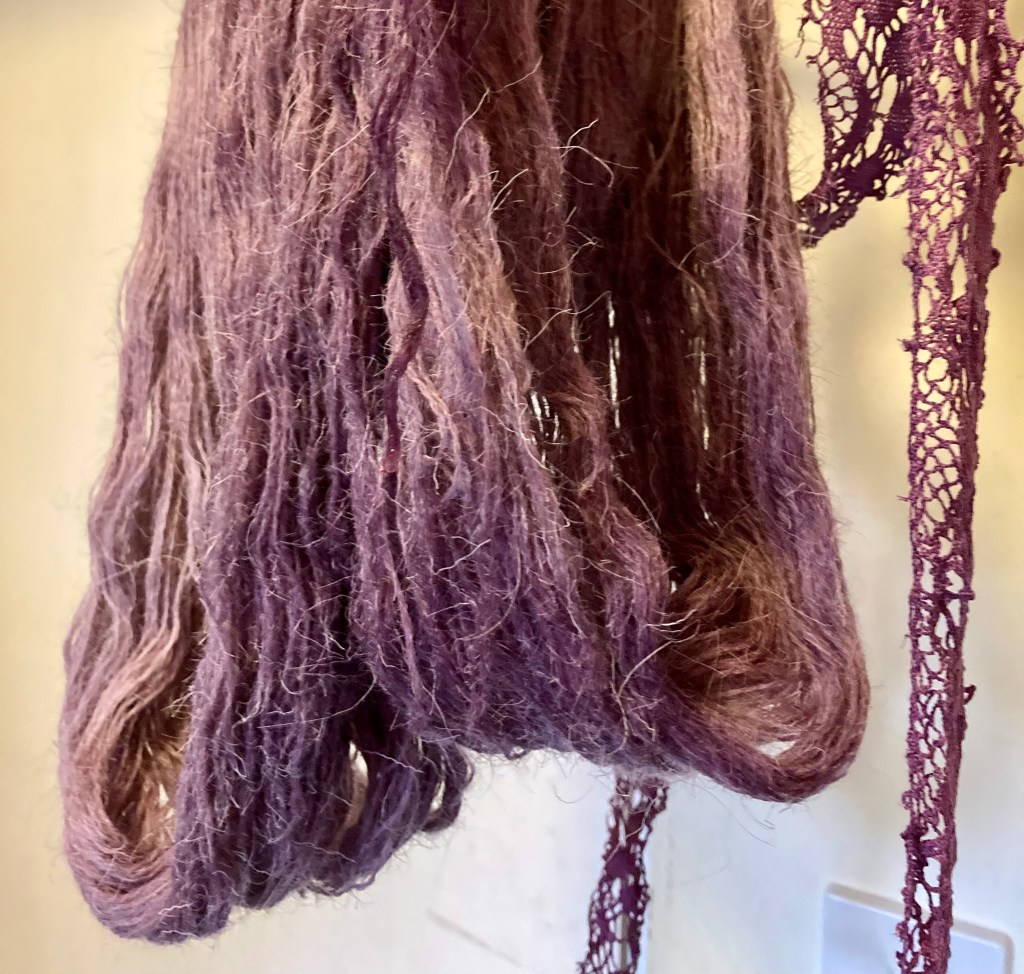
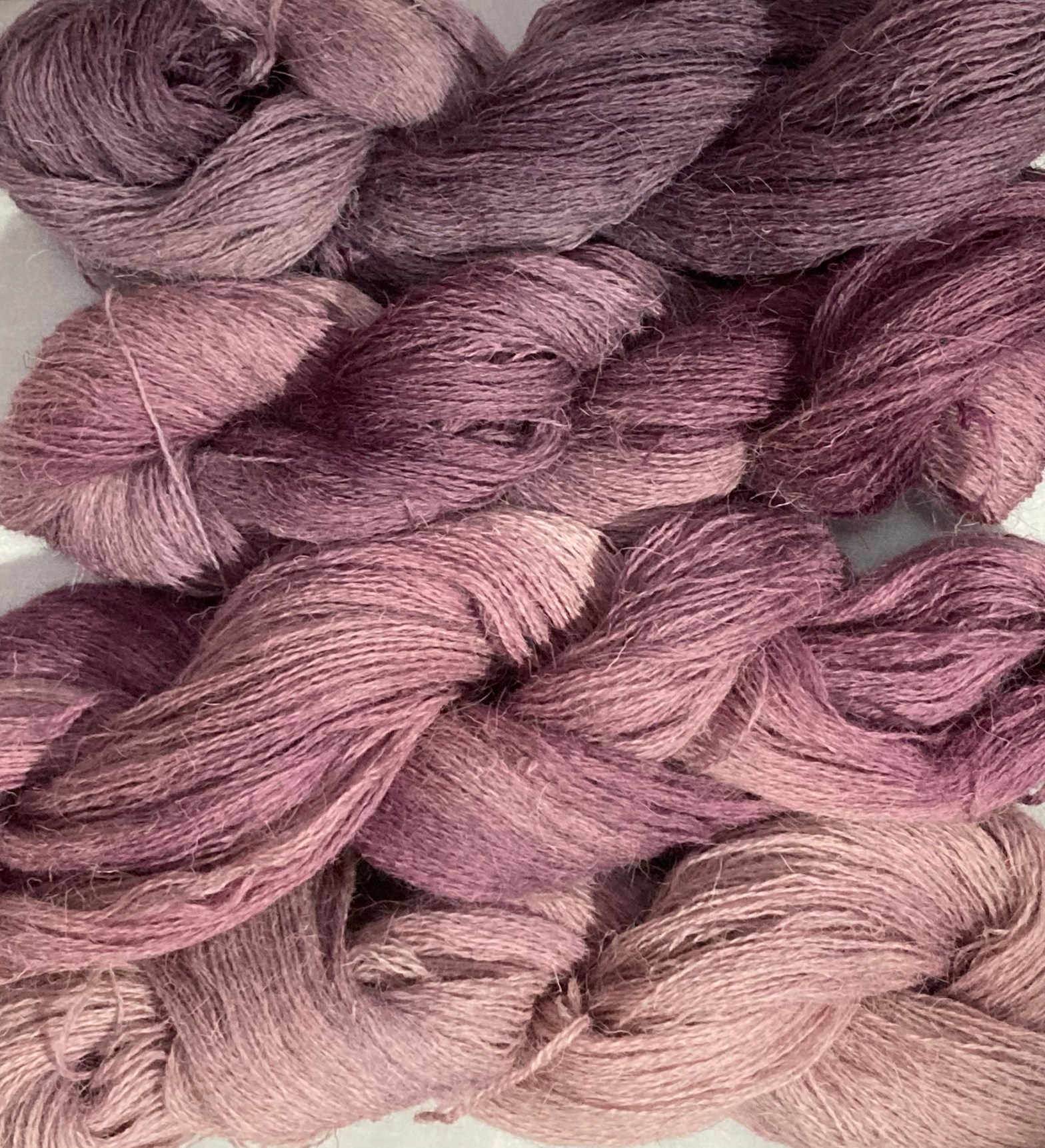
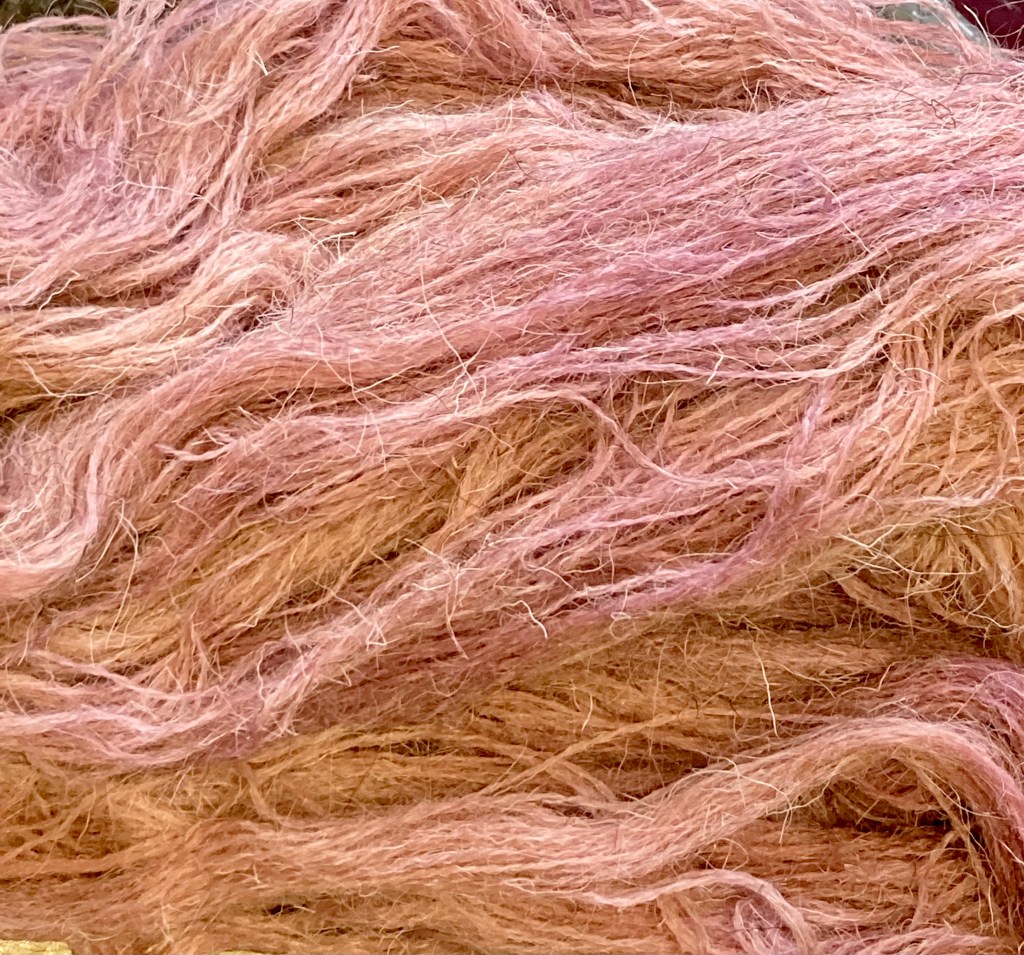
After a few minutes, I removed the yarn from the dye bath and rinsed it to assess the colour uptake. I was satisfied with this, so placed the next skein into the dye bath. This was not noticeably paler in colour, but was slightly less blue, making the colour a fractionally different tone. The second skein was removed and the dye bath still had a nice lot of colour, so a third skein was placed in. This came up slightly lighter. Both the second and third skeins were dyed unevenly and the mottled effect is rather attractive while the yarn is still wet.
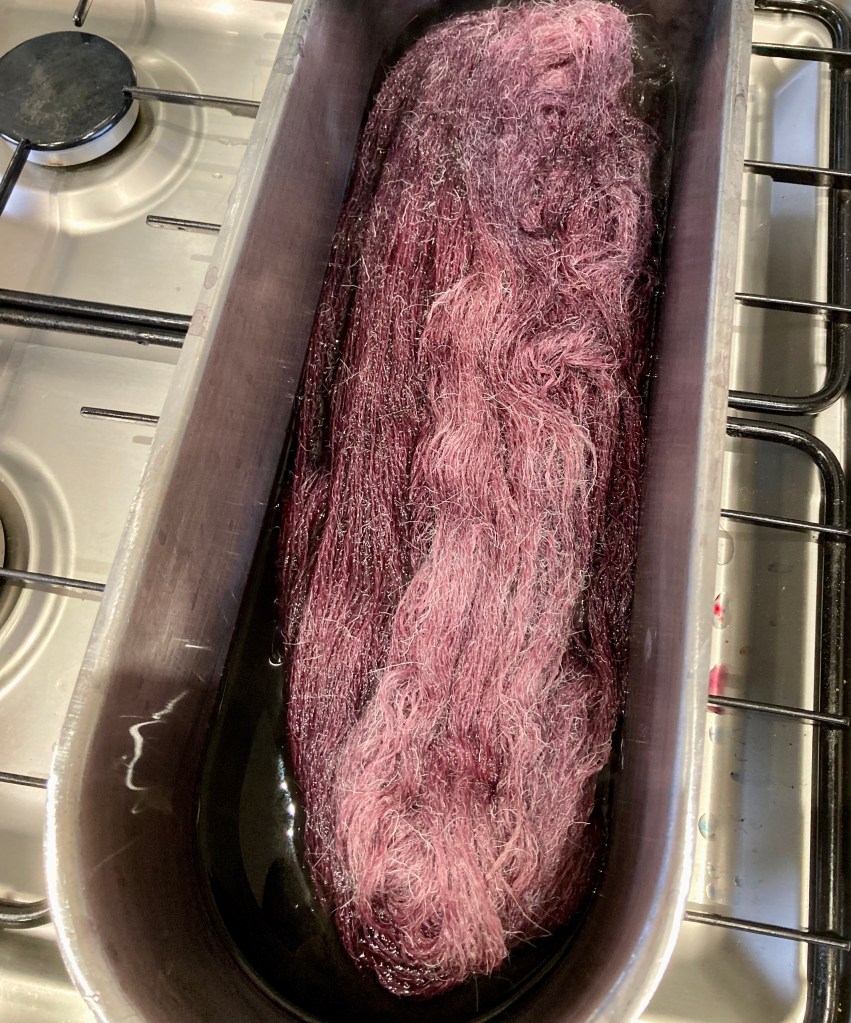
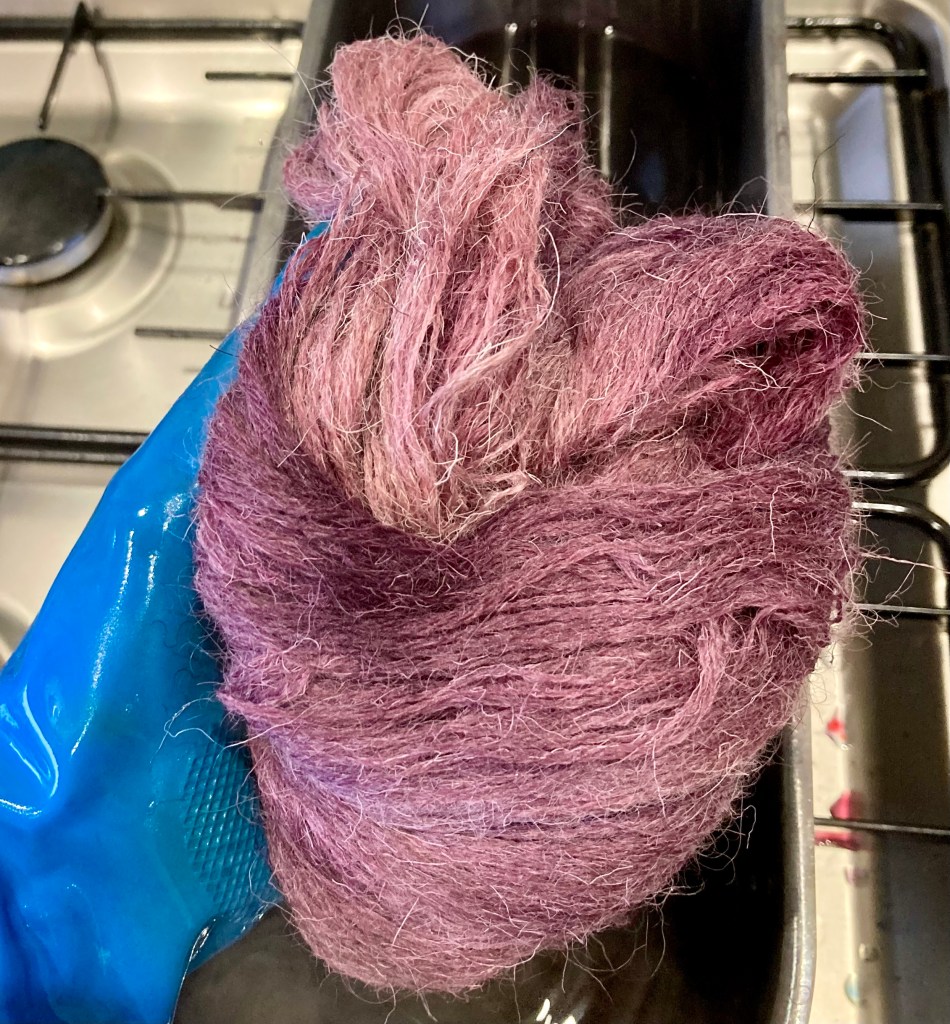
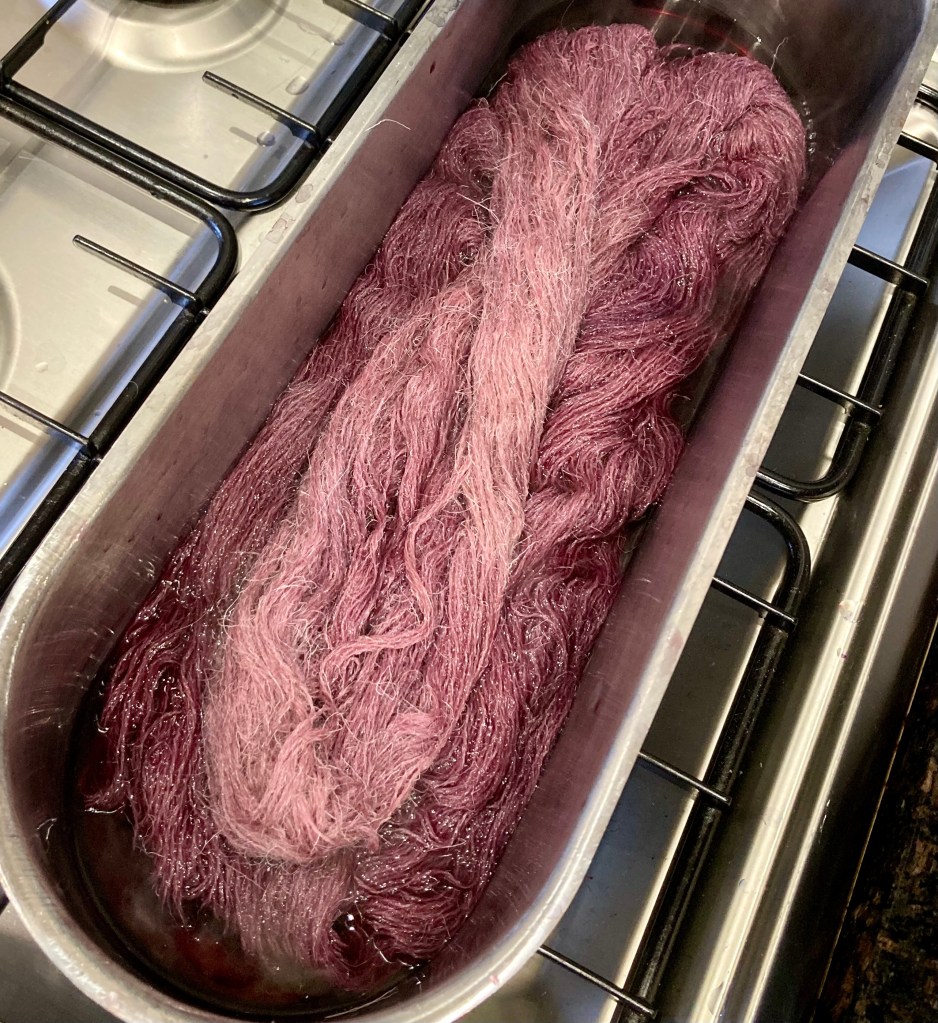
There was still a little colour left in the dye bath, so a fourth (and final) skein was placed in it. This was noticeably paler and has come out a lovely soft pink. The dye bath still retained a little colour, but there was not sufficient volume nor dye left to do anything, so I decided to make that do and threw the rest out.

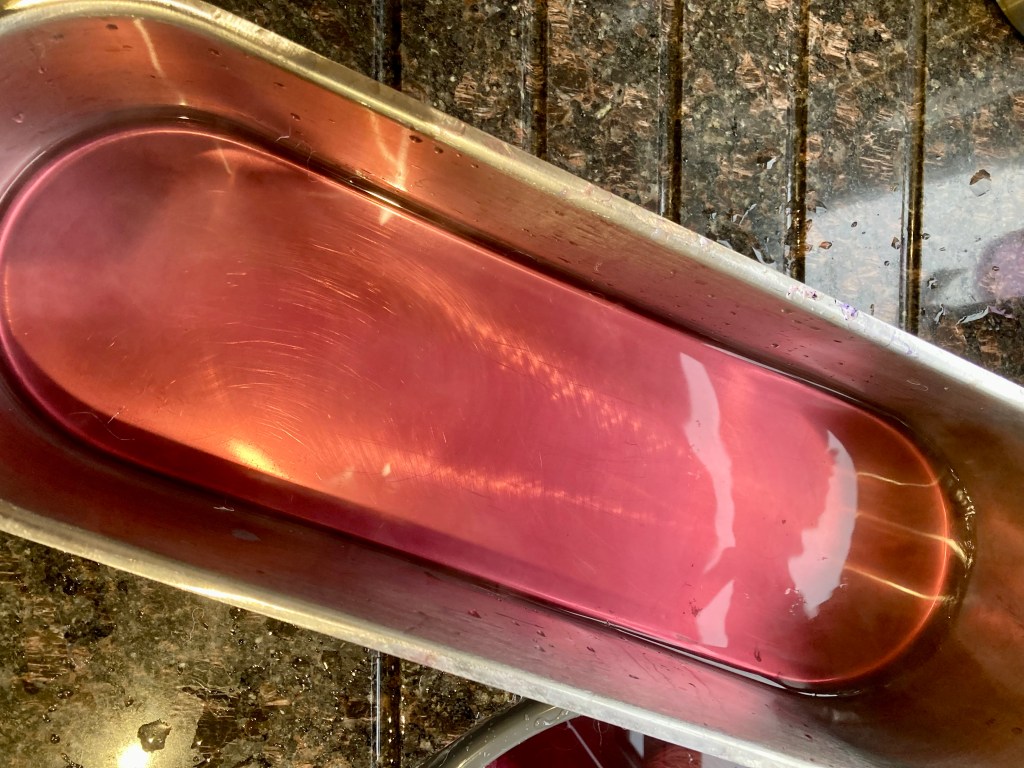
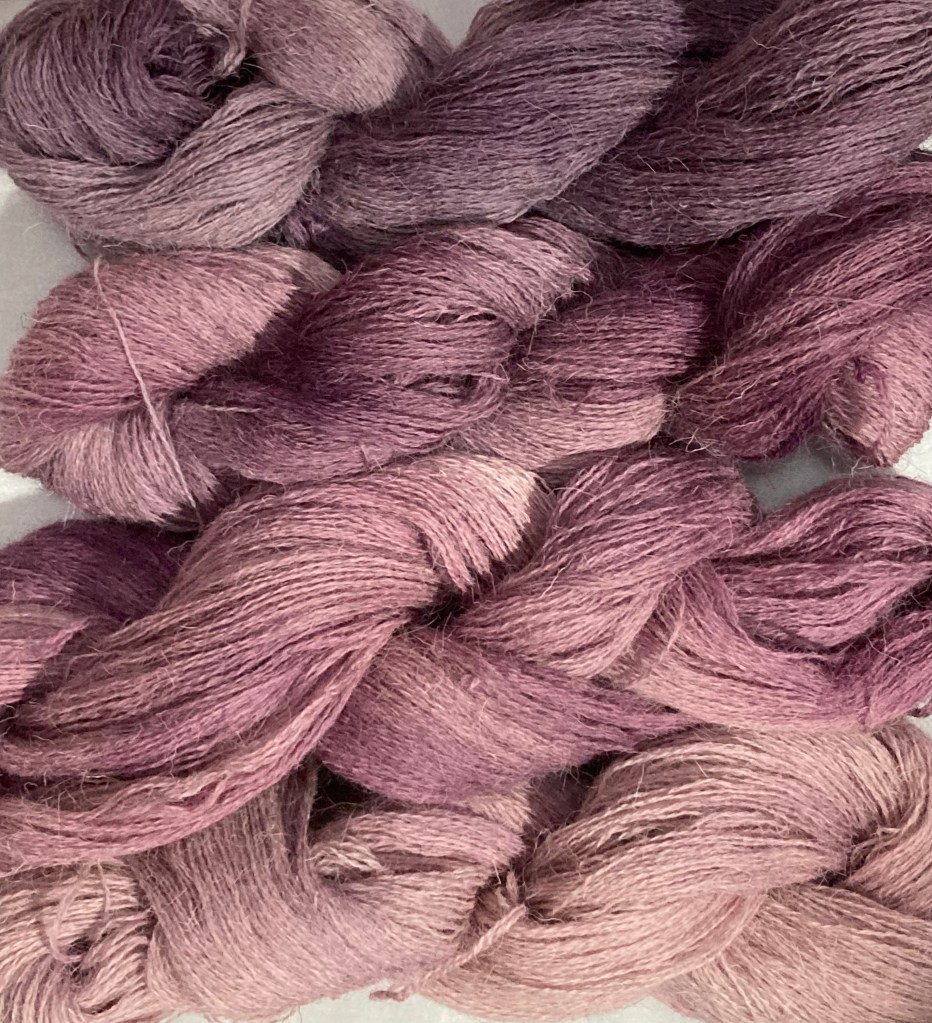
In the photo below are the resulting dry skeins of yarn in order of dyeing from top (first) to bottom (last). I am pleased with the colours achieved and satisfied with the resulting minimal waste colour in the water, having used up the vast majority of the dye.
In conclusion
This method is not 100% sustainable in terms of watercourse pollution, but it’s a great improvement and I’m working towards zero. It is a work in progress and I will attempt to refine the process in future. I’m really looking forward to weaving some fabric with this and will post that result in due course!
Some people will really not like to dye anything less than perfectly uniform coloured yarn: this method isn’t for them!
If you have any suggestions or comments, I’ll be really pleased to hear from you.
 Sarah McAlister