
My knitting is a comfort activity that keeps my busy hands occupied while watching TV and during long journeys. As a result, what I knit is quite important: it can’t be too complicated, or require constant checking on a chart or row counting but still needs to be “serious” enough to keep my attention.

I’ve done socks and have knitted so many for gifts that the pattern is seared on my memory. Time for a change!
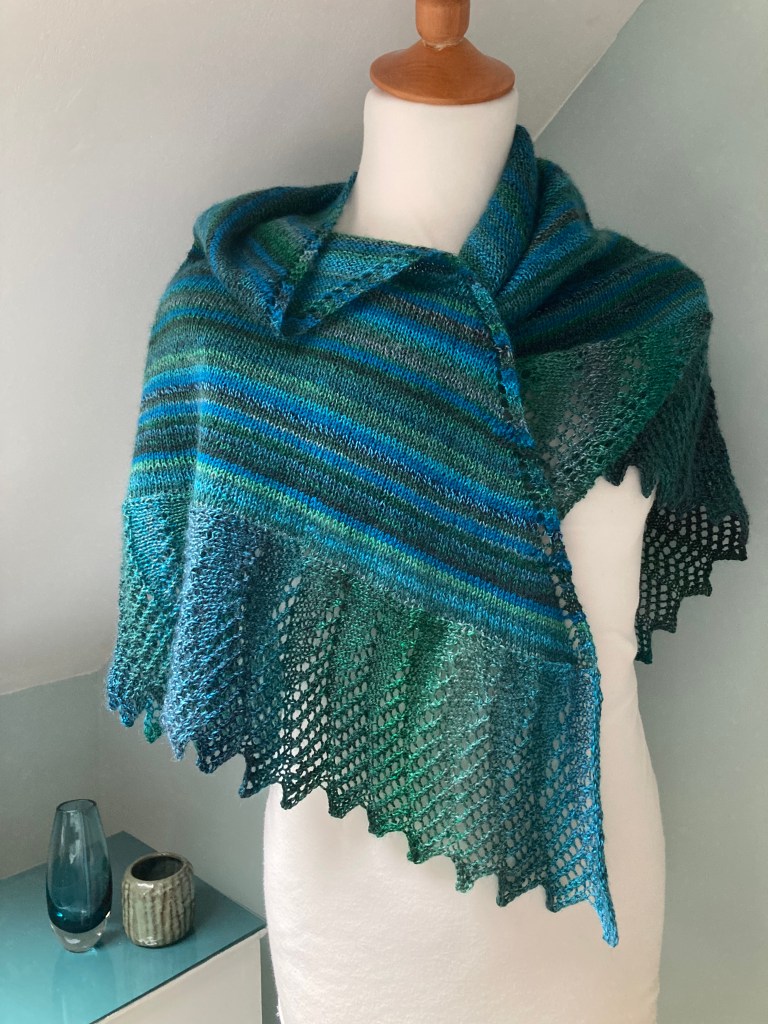
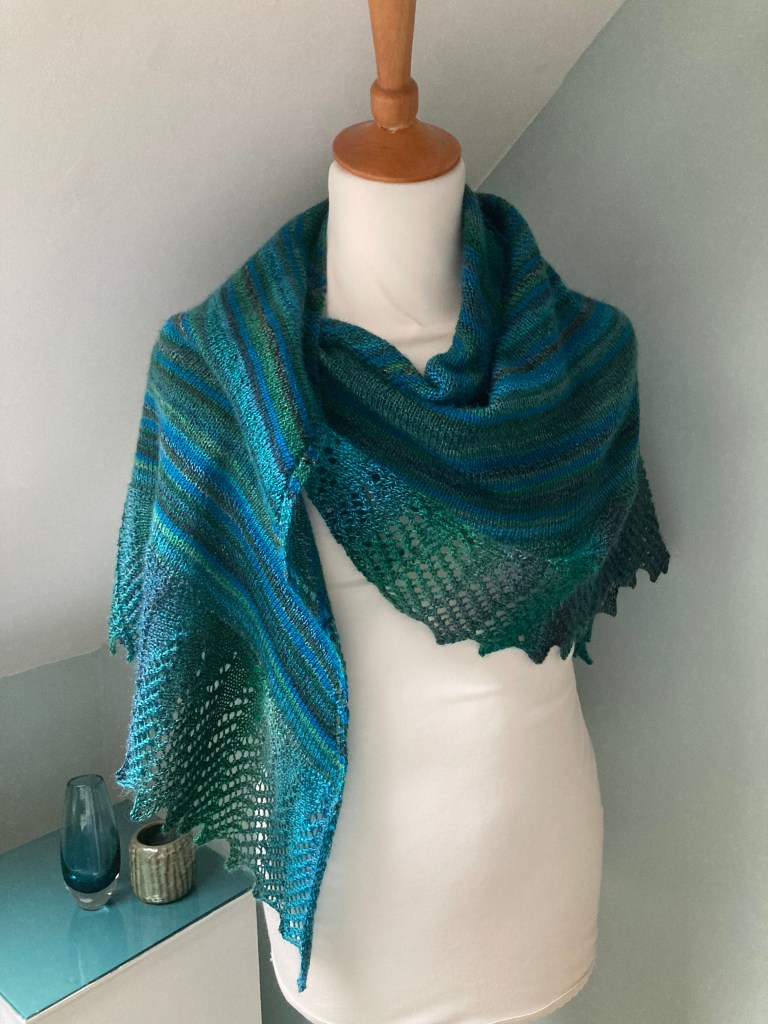
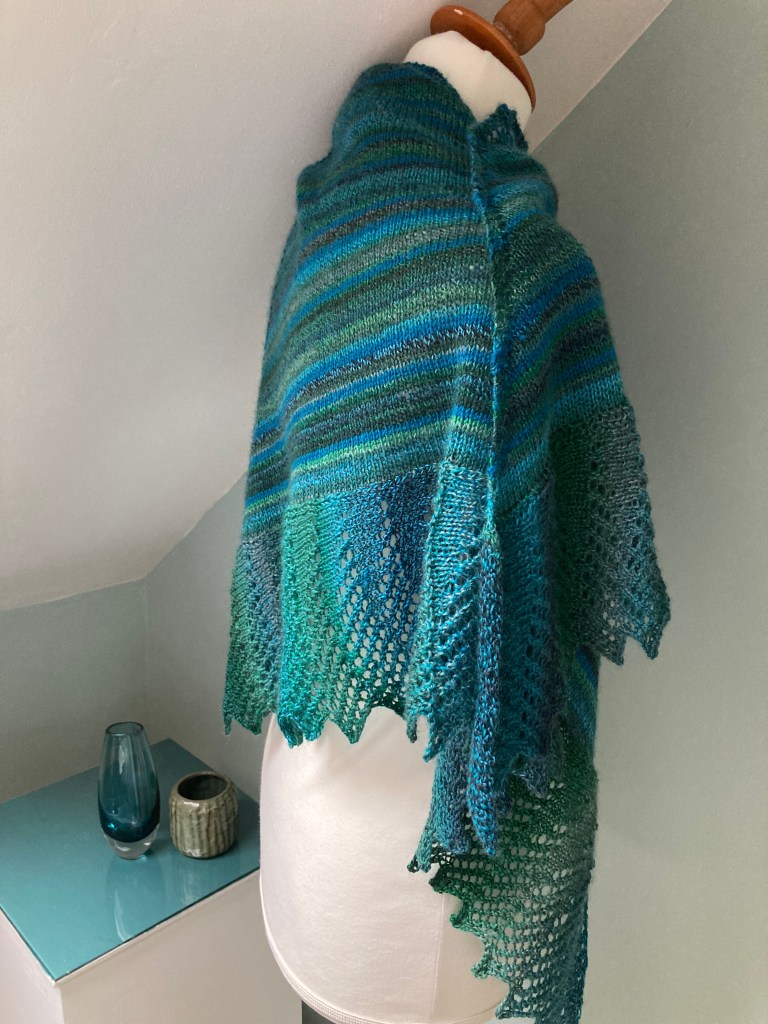
I wanted to have a go at knitting another shawl and there are many beautiful patterns available. My demands for something easy to remember, but not boring was a tough challenge. In the end I mashed up two patterns to achieve this result.
The main body of the shawl is adapted from a free pattern in the Simple Collection by Tin Can Knits called GRAIN. The yarn I used is Schoppel Zauberball Crazy in Cool Botanical Garden colour way. I interspersed two rows of King Cole Merino Blend 4-ply in Kingfisher shade at random points, joining the yarns by a loop through method that is illustrated in a separate blog here. This did mean a slightly bulkier join, but is much more hygienic than spit-splicing when knitting on public transport and avoids sewing-in.
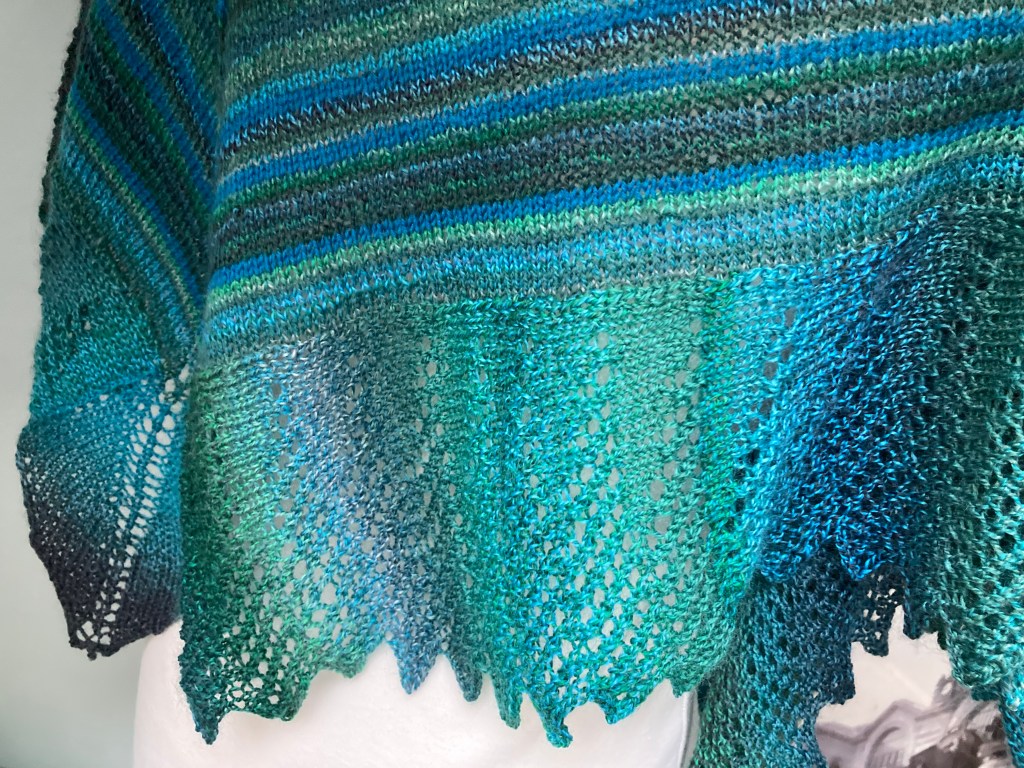
The lacy edge is a variation on one by Kate Davis and is a variation on the edging from her “Hap for Harriet” pattern. I knitted that hap several years ago and found the edging a very memorable design that is easy to knit and remember as the shawl goes on.
The shawl in the pattern is in plain knit and I wanted smooth stocking stitch, so instead of every row being knit as given in the in the pattern, I knitted one row and purled the next.
When the Grain shawl was big enough, I left the stitches on a long double pointed needle. I calculated that I should knit the Grain pattern section until the number of stitches all the way across was a multiple of six (that is the pattern repeat for the edging), plus five centre stitches. I did this, but still had to bodge a bit in the centre, having dropped a stitch further back (when the England football team scored, some stitches fell off the needle!) and didn’t notice until much later on.
Be aware that when starting the Kate Davis edging from the outside edge of the shawl, one side will be pattern on knit side, the other will be pattern on the pearl side (swap knit/pearl for each side, so it’s symmetrical.).
Pick up a stitch from the main shawl on each Hap for Harriet pattern row and knit it together with the first stitch on the edging section.

When you get to the centre five stitches, store the 25 lacy edge pattern stitches on a holder and start the other side of the lacy edging, remembering to reverse the knit/purl rows.
At centre, I needed to make up a lozenge shape to fill the gap. This will keep the continuation of the two hole pattern going for the length of the shawl.
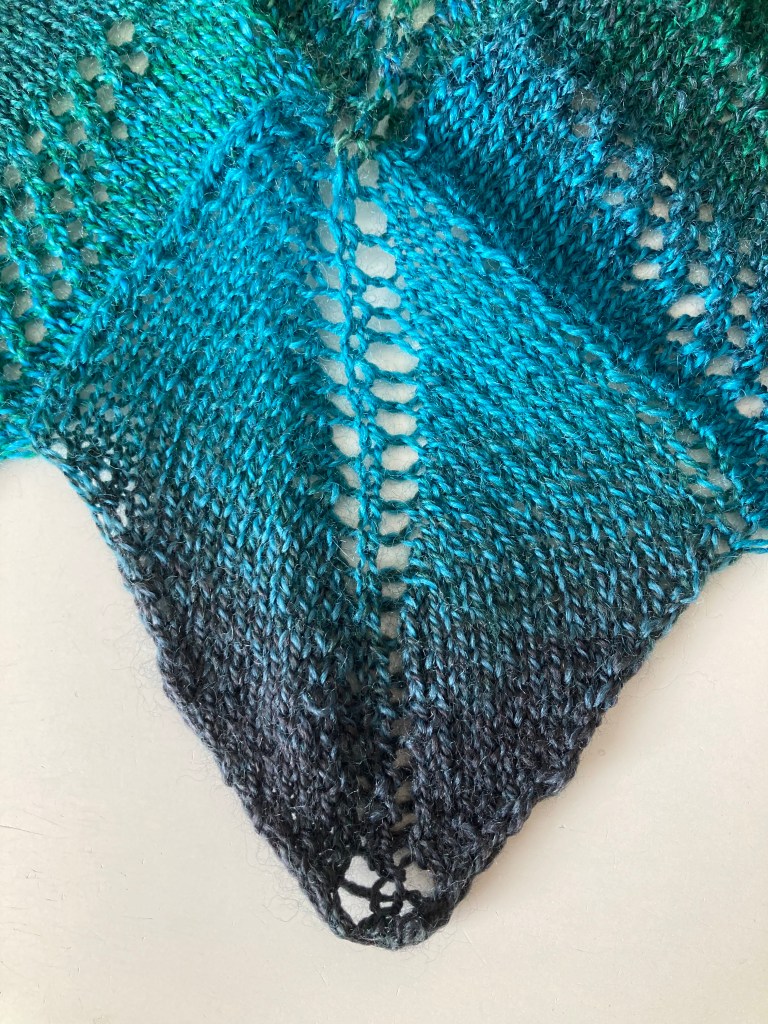
Here are my made-up directions: pick up the remaining centre five stitches on a double pointed needle in the shawl and set up as follows:
Checking that the knit/purl sides are correct, knit 2, place marker, yarn over, knit1, yarn over, place marker, knit to end
turn
pick up edge stitch purl wise and purl this and the first stitch on your working needle together, purl to marker, slip marker, purl1, slip marker, purl to last stitch
turn
pick up edge stitch knit wise, knit this together with the first stitch on your working needle, knit to marker, yarn over, slip marker, knit 1, slip marker, yarn over, knit to last stitch
turn
repeat these two rows until you have no further edge stitches to pick up ending with a purl row.
Now we need to decrease the lozenge shape.
first decrease row: knit 1, knit 2 together, knit to 2 stitches before the marker, knit two together, yarn over, slip marker, knit 1, slip marker, yarn over, knit 2 together, knit to last three stitches, knit two together, purl 1,
turn
purl across all stitches
turn
continue these two rows until 5 stitches remain
knit two together, remove marker, knit 1, remove marker, knit 1, knit two together (3 stitches remain)
turn
knit all three remaining stitches together and bind off
Other than the last bind-off, there shouldn’t be any ends to sew in as the looping join has been used throughout, but check and trim any ends neatly.
Wash gently according to yarn band instructions.
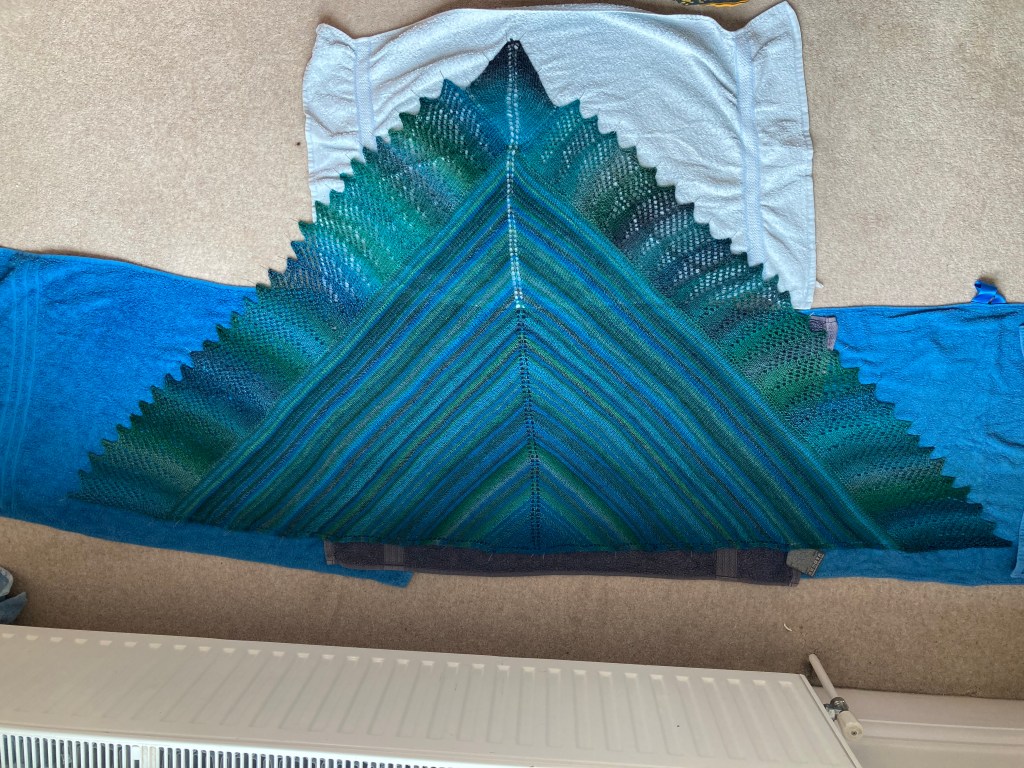
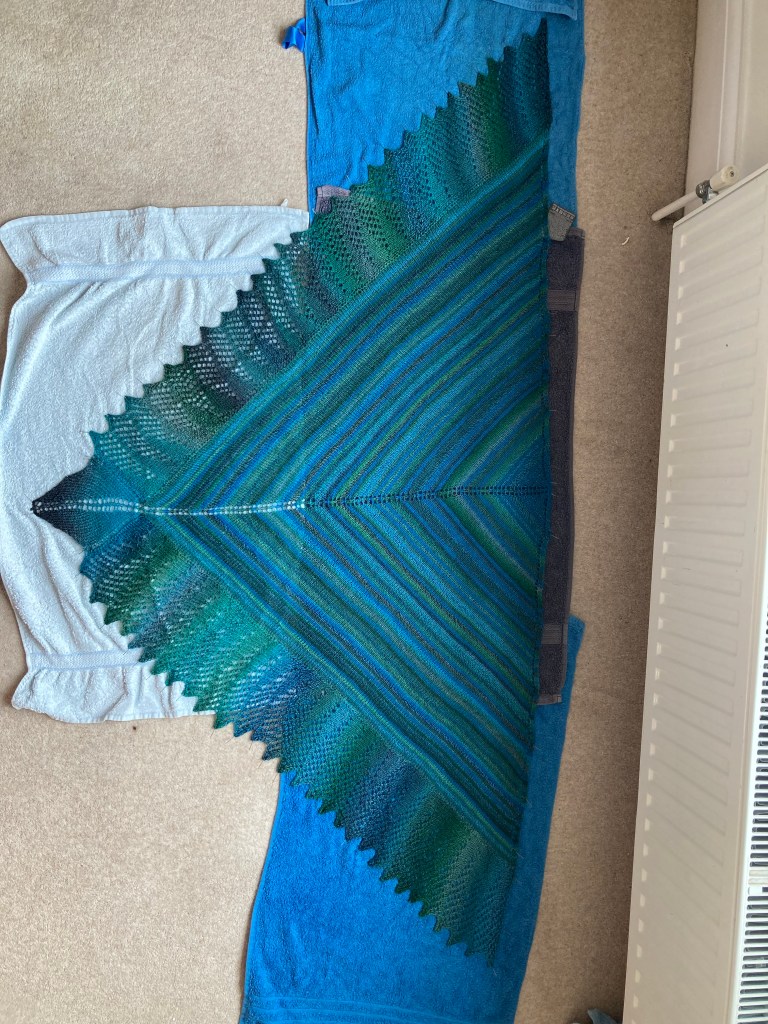
Block. See my previous blog on how to block a shawl. I use large towels on a carpeted floor and ordinary sewing pins. there isn’t any need to buy loads of new expensive equipment for this process.

 Sarah McAlister